

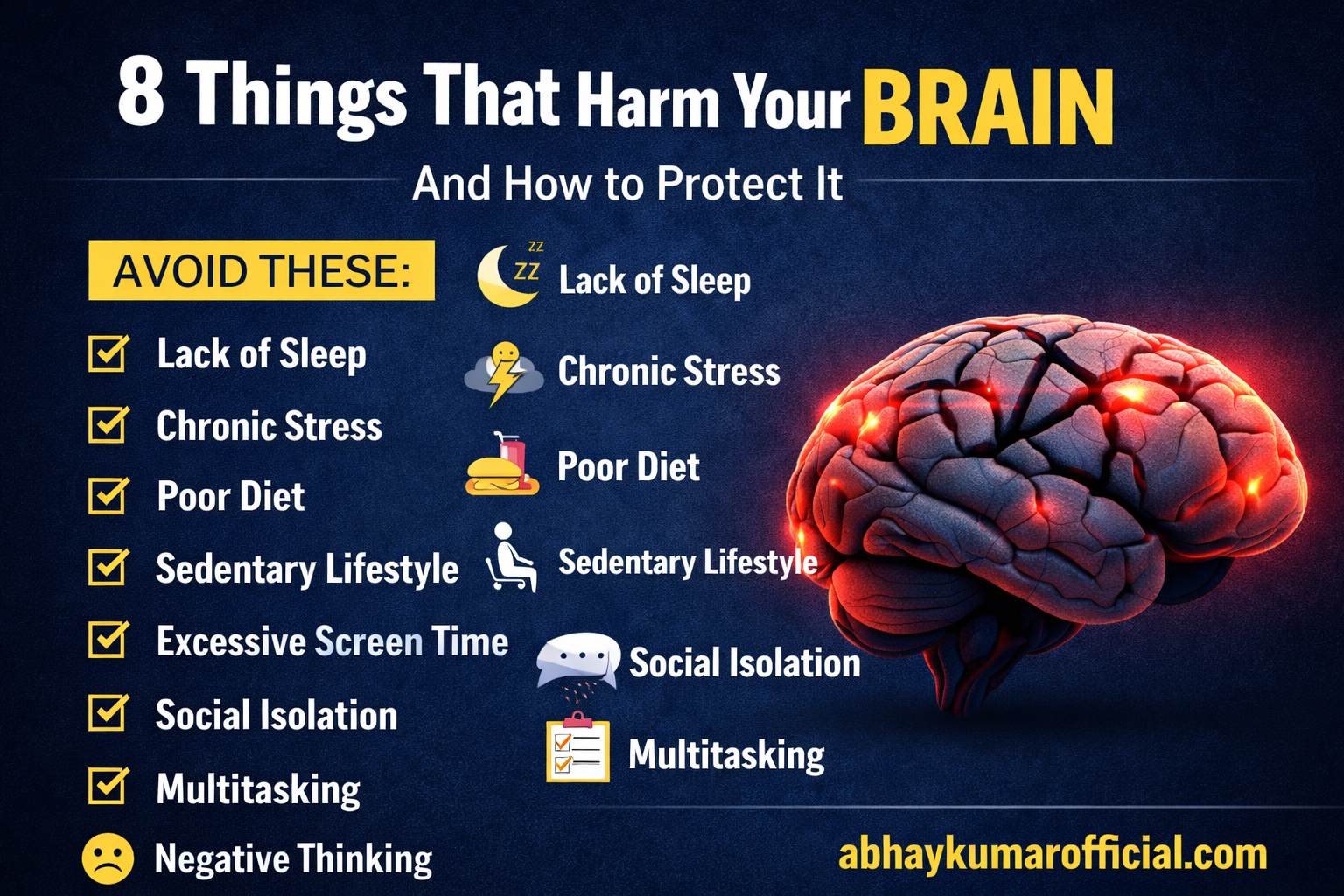
Your brain is your most powerful asset—it controls your thoughts, memory, focus, emotions, and decision-making. Yet, many daily habits unknowingly damage brain function over time. From poor sleep to chronic stress, these factors silently reduce cognitive performance, memory retention, and long-term mental health.
In this expert-level guide, we will explore 8 scientifically backed factors that harm your brain and practical strategies to protect and optimize it.
1. Chronic Sleep Deprivation
Sleep is not a luxury—it is a biological necessity for brain repair and memory consolidation.
When you consistently get less than 6–7 hours of sleep:
- Cognitive performance declines
- Memory formation weakens
- Emotional regulation becomes unstable
Chronic sleep deprivation is also linked to neurodegenerative conditions like Alzheimer’s disease.
What to Do:
- Maintain a consistent sleep schedule
- Avoid screens 1 hour before bed
- Aim for 7–9 hours of quality sleep
2. Excessive Stress
Short-term stress can enhance performance, but chronic stress is highly damaging.
Long-term stress increases cortisol levels, which:
- Shrinks the hippocampus (memory center)
- Impairs decision-making
- Reduces focus and attention span
It can also contribute to conditions like Depression and anxiety disorders.
What to Do:
- Practice meditation or NSDR (Non-Sleep Deep Rest)
- Engage in physical exercise
- Use breathing techniques (e.g., 4-7-8 method)
3. Poor Diet (Highly Processed Foods)
Your brain consumes about 20% of your daily energy. Poor nutrition directly affects brain performance.
Diets high in:
- Sugar
- Trans fats
- Ultra-processed foods
can lead to:
- Brain inflammation
- Reduced neuroplasticity
- Increased risk of Type 2 Diabetes (which impacts brain health)
What to Do:
- Eat omega-3 rich foods (walnuts, flaxseeds, fish)
- Include antioxidants (berries, leafy greens)
- Stay hydrated
4. Lack of Physical Activity
Physical inactivity reduces blood flow to the brain, which limits oxygen and nutrient supply.
Exercise helps:
- Improve memory and learning
- Boost neurogenesis (new brain cell growth)
- Enhance mood and focus
Sedentary lifestyles are linked to cognitive decline and increased risk of Dementia.
What to Do:
- 30 minutes of daily exercise (walking, yoga, strength training)
- Include movement breaks during long sitting hours
5. Excessive Screen Time
Digital overload is one of the most common modern brain stressors.
Too much screen time:
- Reduces attention span
- Causes mental fatigue
- Disrupts sleep due to blue light exposure
It also rewires the brain for instant gratification, reducing deep focus capability.
What to Do:
- Follow the 20-20-20 rule (every 20 mins, look 20 feet away for 20 seconds)
- Limit social media consumption
- Use blue light filters
6. Social Isolation
Humans are social beings. Lack of meaningful interaction negatively affects brain health.
Social isolation can lead to:
- Cognitive decline
- Increased risk of depression
- Reduced emotional intelligence
Studies show isolation increases the risk of Dementia significantly.
What to Do:
- Maintain strong social connections
- Engage in meaningful conversations
- Participate in group activities
7. Multitasking Overload
Contrary to popular belief, multitasking reduces productivity and harms brain efficiency.
When you multitask:
- Your brain switches tasks rapidly (task-switching cost)
- Memory retention drops
- Focus becomes fragmented
Over time, it weakens your ability to perform deep work.
What to Do:
- Practice single-tasking
- Use time-blocking techniques
- Eliminate distractions during work
8. Negative Thinking Patterns
Your thoughts shape your brain structure through neuroplasticity.
Chronic negative thinking:
- Strengthens stress pathways
- Weakens problem-solving ability
- Increases risk of anxiety and depression
This creates a loop that continuously harms brain performance.
What to Do:
- Practice gratitude journaling
- Use cognitive reframing techniques
- Surround yourself with positive influences
Conclusion
Your brain health is not determined by genetics alone—it is shaped daily by your habits.
Avoiding these 8 harmful factors can:
- Improve memory and focus
- Enhance mental clarity
- Increase productivity
- Protect long-term brain health
As a memory coach, you already understand the importance of cognitive performance. By optimizing these lifestyle factors, you not only improve your own brain but also set a powerful example for your students and clients.
FAQs
1. Can brain damage from bad habits be reversed?
Yes, to some extent. Due to neuroplasticity, the brain can recover and improve when you adopt healthier habits like proper sleep, diet, and mental training.
2. How long does it take to improve brain health?
Noticeable improvements can begin within 2–4 weeks of consistent lifestyle changes, but long-term optimization takes months.
3. Is stress always harmful to the brain?
No. Short-term stress can boost performance, but chronic stress is harmful and must be managed.
4. What is the best exercise for brain health?
Aerobic exercises like walking, running, and cycling are highly effective, along with yoga and mindfulness practices.
5. Does screen time permanently damage the brain?
Not permanently, but excessive usage can impair focus and sleep. Reducing screen time can restore normal function.